



The world at the bottom of Nha Trang Bay has diverse species with unique characteristics that can make us wonder about it.
Reader Tri Nguyen has a PADI Divemaster international diving certificate with more than 10 years of experience, and is also a professional underwater photographer. Tri Nguyen is passionate about diving and underwater photography. Thanks to his love for nature, especially for Vietnamese marine life, he has completed a photo series about Vietnam's ocean world.
The colorful world under the Nha Trang Bay
Hon Mun Marine Reserve is located in Nha Trang Bay and includes islands such as Hon Tre, Hon Mieu, Hon Tam, Hon Mot, Hon Mun…and surrounding waters. The area of approximately 160 km2 includes approximately 38 km2 of land and approximately 122 km2 of water surrounding the islands.
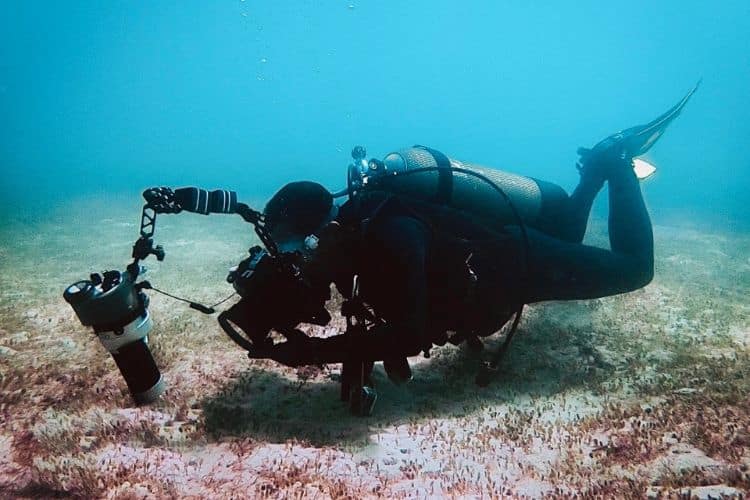
To take this photo series, my colleagues and I spent more than 3 years exploring, learning and doing hundreds of hours of diving, despite the rain, wind and difficulties. Underwater photography techniques require the photographer to have professional scuba diving skills.
At the PADI Divemaster level, a diver can float completely motionless, without rising or sinking underwater. Strong currents can be a challenge to get good or clear photos.
Imperial shrimp (Periclimenes imperator)
Also known as “shrimps”, they live symbiotically on a sea slug, surrounded by its lungs. Despite their name, which is reminiscent of king crabs, these shrimp are very small – less than 2.5 cm long.

Photo taken at night at Hon Ong, Dam Mon Village, Van Thanh, Van Ninh, Khanh Hoa, depth 20 m, water temperature 28°C.
These shrimps usually live in pairs and are at peace with symbiotic hosts such as sea slugs or sea cucumbers. These creatures provide food and protection for the shrimp, and in return help the host clean up algae and parasites.
Leaf Scorpionfish (Taenianotus triacanthus)
Lives in sand or near rocky areas near coral reefs, up to 10 cm long. I took this photo during a dive at 25 m depth, water temperature 24°C.

Painted Frogfish (Antennarius pictus)
This species can reach a length of 30 cm when fully grown. The toadfish swims using its legs. The color of this species is varied because it always tends to change to suit its habitat. The skin is soft with small spines, has colored spots. This species lives alone near coral reefs, rocks at depths of up to 75 m.

Porcelain Anemone Crab (Neopetrolisthes ohshimai)
At a depth of 15m, the water temperature is 28 degrees Celsius. This crab lives in symbiosis with sea anemones on the sand. Due to their slow movement, they can hardly survive in the ocean without the protection of sea anemones.

Wire Coral Goby (Bryaninops yongei)
Living and camouflaged on coral reefs at a depth of 25 m, under the sea of Hon Mun. This is the most elaborate and time-consuming photo, because I spent more than 60 minutes hovering and motionless, avoiding scaring the fish away.

Feather duster worms (Sabellidae)
Are a family of marine polychaete tubeworms characterized by their ciliated protrusions. They live in tubes built from a self-secreted mucus, reinforced with sand and shell fragments.

It took me over 90 minutes to take this photo at 10 m depth, because just by seeing movement the feathers will retract. You have to wait for them to spread out naturally and sway with the water current.
Ornate ghost pipefish – (Solenostomus paradoxus)
Hermaphrodites, can become either female or male depending on the habitat. Scuba divers can find them at depths of 3 to 25 m, especially near rocky outcrops and coral.

Source: Vnexpress

Good